Blog
Many of us will know the experience: we come across a snake in the garden, on the patio or in the house. What to do? Most snakes are fairly small, but still have to be treated with caution. They may also attract unwanted attention from pets, which can easily lead to the snake, the pet, or both, being injured.
Of course the rule of thumb is that when in doubt, one should contact someone who has the required experience to handle snakes, especially when it comes to larger snakes. (Here in Munster our current resident snake specialist is Corrie Lotter.) However, in most cases this isn’t necessary, as many snakes are small enough to be dealt with easily by home owners. Read on and we'll tell you how!
Snakes are sensitive creatures and naturally seek places to hide. Rather than trying to handle a snake yourself, it is far better (and easier!) to provide the snake with a hiding place. Most of the time, or with no more than some gentle encouragement, the snake will move into a provided hiding place all by itself.
A simple and effective way to provide such a hiding place is to use a cardboard box. Keep one handy, along with a flat sheet of cardboard, in a place where you can quickly and easily get to it. Make sure the box is not too big, or it won't offer the safety of a dark, enclosed space that the snake will naturally be attracted to.
Upon discovering a snake that should be removed, one should do the following (also see the photos below):
- Move slowly; don’t scare or threaten the snake, and avoid touching it or getting your hands close enough to it to be bitten. (Even harmless, non-poisonous snakes may bite if they feel threatened.)
- Put the box on its side near the snake.
- Put the sheet of cardboard behind the snake.
- Wait for the snake to move, adjusting the box into the snake's path as necessary. Don’t hurry, don’t force it, just give it a little time if needed. Sooner or later the snake will seek safety inside the cardboard box.
- When the snake is in box, carefully lift the box, turn it upright and cover the opening with the cardboard sheet.
- Release the snake at a safe place, such as the undergrowth in a far corner of the garden, or in a wild area, to go about its business naturally.
In the image below, note that gardening gloves are not a prerequisite for the job. We just happened to be gardening when we found the snake!
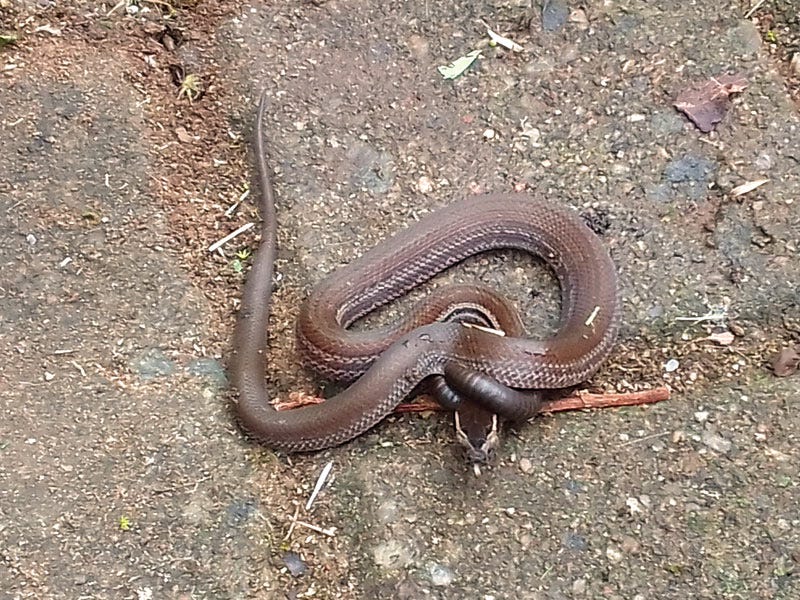
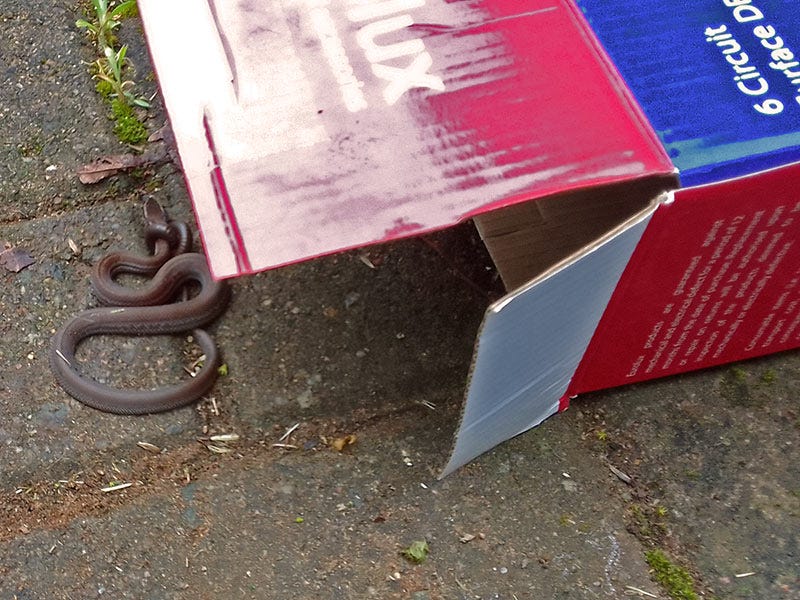
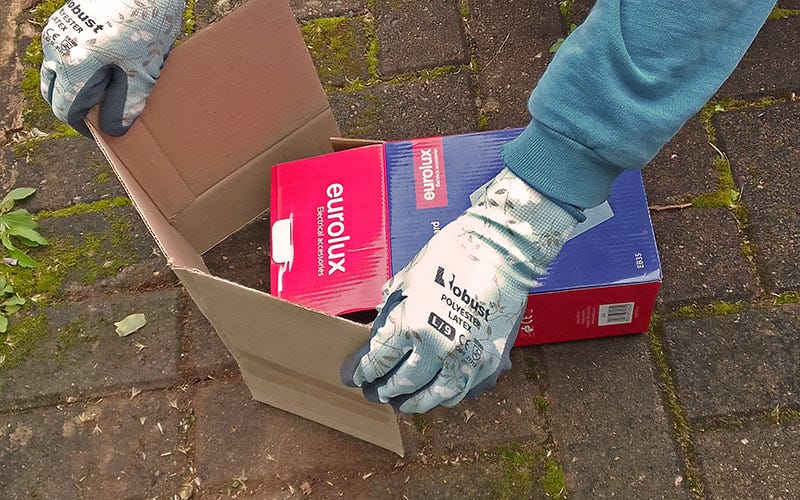
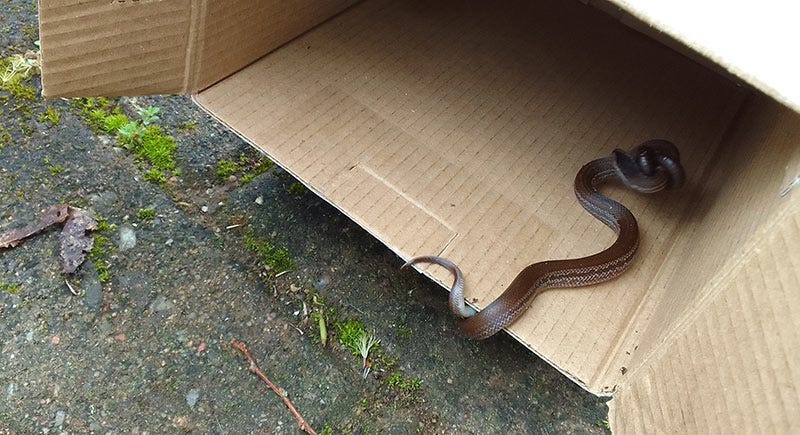
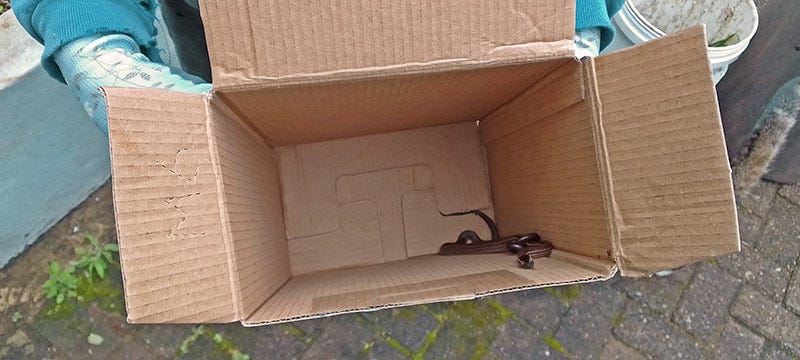
Thanks to Corrie, we now know that the snake in the photos above is a Brown House Snake. It was rather feisty and raised its head in an attempt to intimidate us, but it is completely harmless. (The poor little guy was just scared). You can read more about this particular snake here.
More information about the various species of Southern African snakes is available on the website of the African Snakebite Institute.
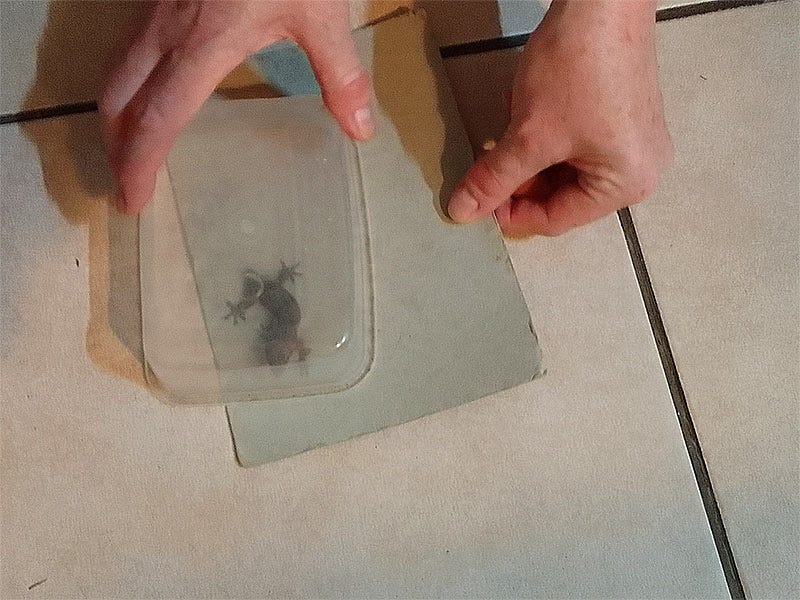
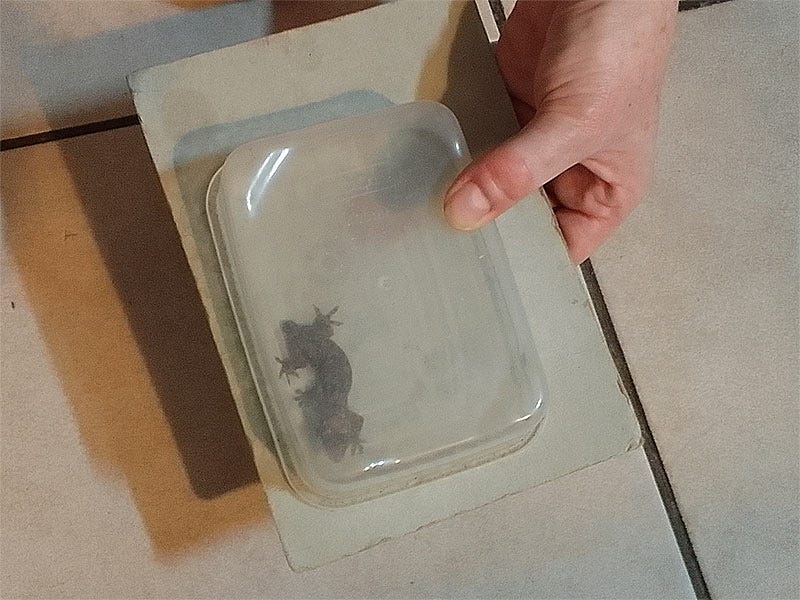
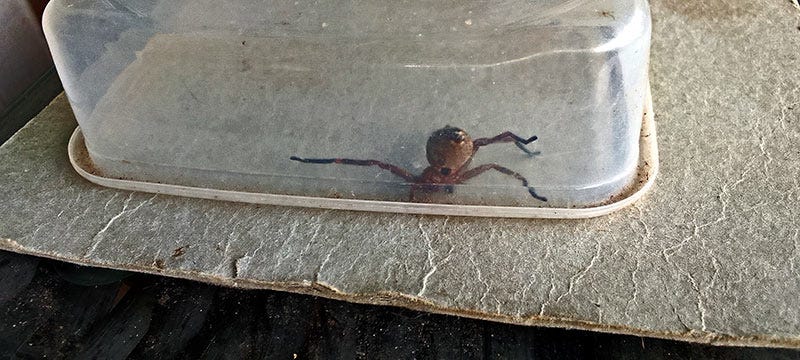
BTW: this method also works fairly well for frogs, toads, geckos and bugs, although sometimes they can be a bit harder to get into the box. In this case one may have to place the box over the critter, and then gently and carefully slide the piece of cardboard under it, going very slowly, so as not to hurt the poor beastie! Keep the box closed with the cardboard until the frog/toad/gecko/bug/whathaveyou can be released in a suitable place.